Credit Report Says You're Deceased? How to Fix It and Your Legal Rights
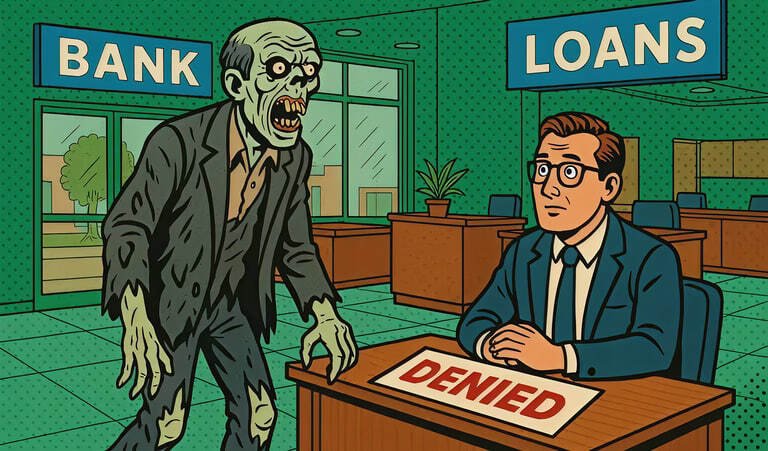
Few credit reporting errors hit as hard or as fast as a wrongful deceased notation. When your credit report says you are deceased, your entire life takes a bad turn: accounts get frozen, loan applications come back denied, and rental applications go nowhere. None of it involves a human being ever even looking at the file. It’s all done by automated systems that see the flag and respond to it. That's the whole process – simple, painful, and unfair. The system simply decided you’re no longer alive.
It sounds absurd. Yet, it happens to real people every year.
What Does It Mean When Your Credit Report Says You Are Deceased?
A deceased flag on a credit file doesn't stay in one place. Once it's there, it moves around. Banks, mortgage lenders, insurance companies, and landlords – they all pull credit data through systems that respond the same way to a deceased indicator on a credit report: they close things down or block new applications without a second look.
The notation can show up in different spots: sometimes it's attached to a specific tradeline as an account status, other times it's sitting in the personal information section. In the worst cases, the score disappears entirely because the file gets suppressed.
And then, living and breathing people find out they’ve been mistakenly reported as deceased in curious ways: some find out from a denial letter, others may get a condolence letter from a bank. Many only realize it when a credit report shows deceased during an application and nobody at the lender can tell them why they were turned down.
However it shows up, consumer deceased on credit report data shuts people out of financial life in ways that are genuinely hard to undo through ordinary channels.
Why Credit Bureaus Report Someone as Deceased
There are three places this error tends to start, and the source matters because it dictates what needs to be done to fix it.
The Social Security Administration keeps the Death Master File, which banks and credit bureaus use to flag deceased individuals. When the SSA records a death incorrectly, whether from a transposed Social Security number, a clerical mix-up, or a relative's death misattributed to a living person, that signal goes out automatically. The mistakenly reported dead status lands on a living person's file with no four-eye check, no review, and no notice.
Creditors are the second source. A bank or lender can mistakenly report as deceased a customer who is very much alive, usually because a joint account holder or authorized user died and the account got coded wrong in the process. Once that data goes to the bureaus, all three agencies typically reflect it.
Then there's the bureaus themselves. Equifax, Experian, and TransUnion each use matching algorithms to attach incoming furnisher data to the right file. When those algorithms get it wrong, because of similar names, overlapping Social Security numbers, or the same date of birth, the result is a falsely reported as deceased entry on the wrong person's file entirely. This one is purely the bureau's fault from the start.
What Happens If You Are Incorrectly Reported as Deceased
Being reported as dead on credit report data means no human is making decisions about access to financial products. The system is. And it doesn't ask questions, nor does it ever doubt its actions.
The consequences can be overwhelming. Bank accounts get closed without warning. Mortgage applications fail at underwriting. Rental applications are rejected before anyone reads the rest of the file. In employment screening, a deceased indicator on credit report can knock someone out of consideration before a recruiter ever sees their name.
Beyond the practical consequences, there's the experience of trying to fix it. People falsely reported as deceased get trapped in loops of phone calls that lead nowhere and dispute submissions that somehow confirm the original error – against all odds and obvious reality. Months of proving a fact about yourself that should require no proof at all are wasted. For many people, a mistakenly reported as deceased lawsuit is the first thing that gets a real response out of the bureaus.
What to Do If Your Credit Report Says You Are Deceased
Move fast, and in order. Here are the steps:
- Pull reports from all three bureaus at AnnualCreditReport.com. Find out which agencies are carrying the notation before doing anything else.
- Figure out where it started. If the SSA may be involved, contact them and ask for a Benefit Verification Letter confirming you’re not listed as deceased in their records. If the error is theirs, correct it there first.
- Call the creditor or furnisher you think may have reported the status. Find out what they have on file and when the entry was made.
- Send written dispute letters to each bureau, carrying the notation by certified mail. Include a government-issued photo ID, proof of address, and the SSA Benefit Verification Letter if you have one. Written disputes sent by mail create a paper trail. That trail matters later.
- Keep everything. Every letter, every response, every denial. If the standard process fails, this is what a legal claim gets built on.
- If the error is still there 30 days after confirmed delivery of your dispute, talk to a consumer protection attorney. At that point, the bureaus are in FCRA liability territory.
How to Check If Your Credit Report Shows a Deceased Indicator
When reviewing reports, check the account status on each tradeline, the personal information section at the top, and whether the report shows a credit score at all, since a missing score is often the first sign something is wrong.
Each of the three major bureaus has its own dispute process, and if the notation appears across more than one report, you need to address each bureau separately. Here’s how to approach each one.
Mistakenly Reported as Deceased by Experian
If you are dealing with the issue many consumers describe as “Experian is reporting me as deceased,” you should move quickly to dispute the error and document the submission. Go to Experian's portal at experian.com/disputes. Submit a written explanation, your ID, and proof of address. Where a furnisher supplied the bad data, Experian is required under FCRA Section 1681i to contact that furnisher and complete a reinvestigation within 30 days.
Mistakenly Reported as Deceased by Equifax
If Equifax has mistakenly reported you as dead, you can file disputes online or mail them to Equifax's dispute address. Certified mail is the better call because the delivery confirmation creates a record if the dispute gets lost or ignored.
Mistakenly Reported as Deceased by TransUnion
If your credit report is showing deceased error by TransUnion, the process follows a similar path to Equifax. TransUnion takes disputes online and by mail. If the notation stays on the file after reinvestigation, the bureau's continued reporting is an actionable FCRA violation.
How to Fix a Credit Report That Says You Are Deceased
Fixing this without legal help is possible yet quite difficult. And it's rarely quick or clean.
Bureau dispute systems run on automated tools like e-OSCAR. Those tools work reasonably well for common errors. A deceased notation is far from being a common error, and the system isn't built to handle it carefully. The usual result is that the bureau sends a brief verification request to the furnisher, the furnisher confirms the original data without actually reviewing it, and the notation comes back marked "verified as accurate." That designation makes the error harder to dislodge and gives the bureau cover on the next attempt.
When the dispute process breaks down, the FCRA provides genuine legal options. Under Section 1681e(b), bureaus have to maintain reasonable procedures to ensure maximum possible accuracy. A deceased indicator on credit report that comes from the bureau's own matching error violates that standard from day one, no prior dispute required. Under Section 1681i, a bureau that doesn't fix the error after a proper dispute, becomes legally responsible for the harm that keeps building up on top of that error.
How to Dispute a Deceased Credit Report Error
A real, working dispute is a written submission sent by certified mail, not a phone call, and not an online form with no delivery confirmation.
A solid dispute package includes:
- A written explanation of the specific error
- Government-issued photo ID
- Proof of current address
- Proof of life – which may be a copy of your Social Security Card or letter from the Social Security Administration (SSA) confirming you’re not listed on their Death Master File
- A copy of the credit report that says you’re deceased
- A written request for correction or deletion within the 30-day reinvestigation window
If the bureau responds by asking for more identifying information instead of actually investigating, that doesn't reset the liability clock. If the bureau marks the notation verified without genuinely reviewing it, that verification is its own potential FCRA violation. Even if a credit bureau continues to report you as deceased after a proper dispute, that is not the end of the road. It's usually where the legal case starts.
Your Rights Under the Fair Credit Reporting Act (FCRA)
The FCRA creates rights that are practically enforceable in court. Section 1681e(b) requires bureaus to follow reasonable procedures to assure maximum possible accuracy. Section 1681i requires them to reinvestigate disputed information and correct or delete what can't be verified. Section 1681s-2(b) requires furnishers who get a dispute notice from a bureau to actually investigate and report their findings honestly.
When those obligations aren't met, the consumer can pursue actual damages, statutory damages up to $1,000 per violation, punitive damages for willful or reckless violations, and attorney's fees.
That last one matters a lot: the FCRA's fee-shifting provision means a consumer who wins can recover legal fees from the defendant. The search lawyer if your credit report says you are deceased tends to reflect the moment someone realizes the standard process isn't going to fix this on its own.
Can You Sue If a Credit Bureau Reports You as Deceased?
Yes. Where being wrongly declared deceased by a credit bureau has caused harm and the bureau didn't correct the error after a proper dispute, there are grounds to sue under the FCRA. The same goes for a furnisher that submitted the deceased status and didn't investigate after the bureau put them on notice.
A mistakenly reported as deceased lawsuit can recover compensation for denied loans, lost housing, lost employment, and emotional distress, which courts have consistently treated as real, compensable harm in FCRA cases. Where the bureau or furnisher acted willfully, punitive damages are on the table too.
The bureau correcting the error eventually doesn't automatically close the door on a claim. Harm that occurred while the error was active and unaddressed after proper notice stays actionable. Marked-as-deceased-on-credit-report lawyers handle this exact situation.
Compensation for Being Incorrectly Reported as Deceased
Compensation in these cases has covered:
- Denied loans and the added cost of higher-rate alternatives taken because of the notation
- Lost housing where a rental or mortgage application was rejected
- Lost employment where background screening flagged the deceased status
- Emotional distress sustained over months or years of fighting the error
- Out-of-pocket costs spent trying to get the record corrected
Because the FCRA is a fee-shifting statute, legal fees come from the defendant when the consumer wins, not from the consumer themselves. When credit bureau reports that you are deceased – nobody should take it as a minor data error. The harm is real and courts treat it correspondingly.
How a Deceased Credit Report Lawyer Can Help
Marked-as-deceased-on-credit-report lawyers at Consumer Attorneys start by pulling the complete credit files from all three bureaus, identifying exactly where the error came from, and reviewing whether any prior disputes were submitted and how the bureaus responded.
From there, formal dispute letters and legal notices go out with documentation built for what comes next. When the standard process doesn't produce a correction, claims get filed under the FCRA. If a credit bureau is mistakenly reporting you as deceased, there’s a dispute process that exists for such cases and it's worth using it. When it doesn't work, the law gives you a harder options.
Talk to a Lawyer About a Deceased Credit Report Error
Attorney consultations on cases of being marked as deceased on credit report are free at Consumer Attorneys. If your credit report says you are deceased, the sooner you address it, the more options to solve it are available.

Deceased on Credit Report
Daniel Cohen

Deceased on Credit Report
David Pinkhasov

Deceased on Credit Report
Moshe Boroosan

Deceased on Credit Report
Meir Rubinov

Deceased on Credit Report
Jonathan Krikheli

Deceased on Credit Report
Nisan Zaghi

Deceased on Credit Report
Yaear Weintroub

Deceased on Credit Report
Atid Malka

Deceased on Credit Report
Max Warshaw

Lana was very knowledgeable and patient. This was my first time using the services of a law firm to fix my credit, and the Consumer Attorneys team nailed it.
I work in finance and expected MUCH more care in every aspect of data handling compared to what actually happens at credit bureaus after discovering incorrect data on my credit report. Finding information belon...
When I first realized I was a victim of identity theft, I was extremely deflated. There’s never a good time for these kinds of things, but it was especially brutal timing when it went down for me. After consult...
When my credit report erroneously marked me as deceased, my financial life turned into a nightmare. My attempts to secure loans were hopelessly blocked, access to my existing bank accounts was frozen, and attem...
Frequently Asked Questions
Being wrongly marked as deceased is extremely damaging, even if you discover it before major financial losses happen. You may be entitled to compensation for the emotional distress of seeing such a serious error, as well as for any financial harm like frozen accounts, denied loans, or lost opportunities. Under the FCRA, you can also recover statutory damages, punitive damages if the mistake was serious, and have your legal fees paid by the companies that caused the error.
If the Social Security Administration (SSA) mistakenly reported you as deceased, that error can quickly spread to creditors and the credit bureaus, causing major problems. Even if the mistake started with the SSA, credit reporting agencies are still responsible for ensuring the accuracy of your credit file. You still have the right to dispute the error, demand corrections, and seek compensation if the mistake causes you financial or emotional harm.
If your credit reports show you as deceased, most lenders will automatically deny your applications. Their systems treat a deceased status as a serious red flag, making it nearly impossible to get approved for loans, credit cards, mortgages, or even rental housing until the error is corrected.
If the error started with the Social Security Administration (SSA), it’s important to contact them right away to correct your official records. However, even if the SSA made no mistake, you still need to dispute the deceased status directly with the credit bureaus. Correcting both the SSA records and your credit reports ensures the error is fully removed from your financial history.
R
ONGS™