Insurance Background Check Errors
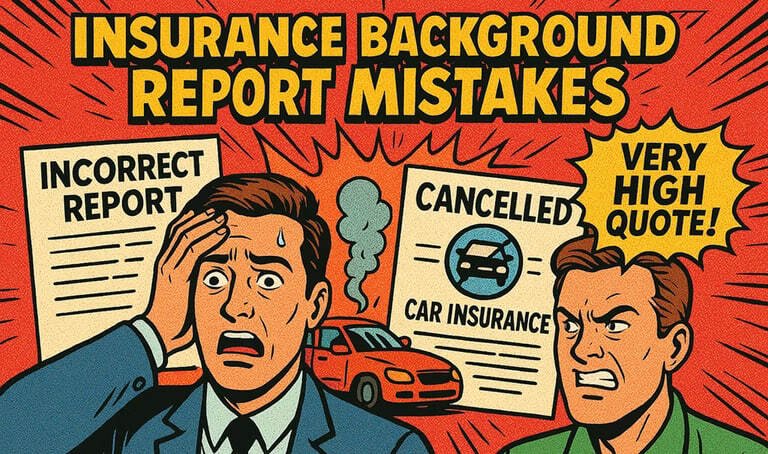
Denied Insurance or Charged Higher Rates Because of a Background Check Error? Our Attorneys Can Help
Navigating the complexities of auto and health insurance can be overwhelming - especially when errors in background reports lead to unjust policy denials, sky-high premiums, or reduced coverage. Unfortunately, these background check mistakes are far more common than most people realize.
Insurance companies rely heavily on third-party data to assess risk. But when that data is inaccurate, outdated, or misattributed, the consequences can be very serious. A consumer may be unfairly penalized, even though they’ve done nothing wrong.
In our experience representing consumers in these cases, insurance reporting errors are some of the hardest for people to catch on their own, since most drivers and policyholders never know a report like this exists until their premium jumps or a policy gets denied.
This guide explains how insurance background checks work, the most common reporting errors we see, your rights under the Fair Credit Reporting Act (FCRA), and what you can do if inaccurate information has affected your insurance.
Background Checks & Your Insurance Rates
Insurance companies conduct background checks to evaluate your risk profile - which in turn determines whether you’re approved for a policy, how much you’ll pay in premiums, and what level of coverage you’ll receive.
Auto Insurance:
Insurers often pull:
- Driving records
- Traffic violations
- DUI history
- Accident reports
- Claims history
These checks help determine whether you're a “safe driver” or a higher-risk applicant - and that label can directly affect your insurance in several ways. If the report shows past accidents, violations, or other risk factors - even if they're inaccurate - you could end up paying higher premiums. Insurers may also offer you limited coverage or impose restrictive policy terms if you're flagged as high-risk. In more serious cases, you might even be denied coverage altogether or forced into a high-risk insurance pool. Even small errors can have major consequences, so it's crucial to make sure your background and driving records are accurate.
Health Insurance:
Medical consumer reports operate differently from auto and property insurance reports. ACA-compliant health plans, including Marketplace coverage, cannot deny coverage or charge higher premiums because of a person's medical history or pre-existing conditions.
Medical underwriting information may still be relevant in other individually underwritten insurance products, including life, disability income, critical illness, long-term care, and certain private health insurance products where medical underwriting is permitted. In those markets, inaccurate medical or prescription information in a specialty consumer report can affect an underwriting decision.
Don’t Let INSURANCE ERRORS Affect Your Future!
Contact Us for a FREE Consultation and Protect Your Rights.
Common Errors in Insurance Background Checks
Insurance companies often rely on third-party consumer reporting agencies to make underwriting decisions. While these reports are intended to help insurers assess risk, they're not always accurate. Some of the most common insurance reporting errors include:
Incorrect or Outdated Information
One of the most frequent problems is inaccurate information that should never have appeared on the report or should have been updated long ago. Common examples include:
- Traffic violations that were dismissed or reported incorrectly
- Accident or insurance claims with the wrong outcome
- Outdated driving records
- Incorrect claims histories
- Prescription or medical information that is inaccurate or incomplete
- Clerical or data entry errors
Mixed Files
We've also seen many cases involving mixed files, where another person's information is mistakenly added to a consumer's insurance report. This often happens because reporting companies rely on automated matching systems that use limited identifying information instead of carefully verifying each record.
Mixed files are especially common when consumers:
- Have common first and last names
- Share a birth date with another person
- Are a Jr. or Sr.
- Have a parent, sibling, or other relative with a similar name
As a result, someone else's driving history, insurance claims, or other negative information may end up on your report.
Records That May Need to Be Updated or Removed
Some records should not continue appearing in an insurance report. For example, certain driving offenses or other records may have been sealed, expunged, corrected, or otherwise updated. However, when reporting companies rely on outdated databases or fail to refresh their records, that information can continue appearing long after it should have been removed.
At our law firm, we've seen consumers discover that years-old information was still being used to evaluate their insurance applications, even though the underlying records had already been corrected or were no longer reportable.
Unfortunately, these reporting errors often remain hidden because insurers typically don't show consumers the underlying reports used to make their decisions. Many people don't learn there is a problem until they're denied coverage, charged significantly higher premiums, or offered less favorable policy terms.
Leading Insurance Background Check Companies
Several companies specialize in collecting and reporting background data used by insurance providers. Some of the most prominent include:
Auto and Personal Property Insurance Reporting Companies
The CFPB's 2025 list identifies several specialty consumer reporting companies serving auto and personal-property insurance markets, including:
- A-PLUS Property by Verisk
- Arity
- Connected Analytic Services
- Drivers History
- Insurance Information Exchange (iiX): A division of Verisk Analytics, iiX supplies motor vehicle records and driving histories to auto insurers and employers.
- LexisNexis C.L.U.E. & Telematics OnDemand: C.L.U.E. is a claims-information exchange that collects and reports up to seven years of auto and personal-property claims information used in insurance pricing and underwriting. LexisNexis also provides driving-behavior data through its Telematics OnDemand service.
Because of the scale and automation in their systems, errors or outdated data can easily be propagated across multiple insurers. The amount of LexisNexis complaints we receive is so vast, that we wrote a separate article about them - Read It Here
Medical Underwriting Reporting Companies
Medical specialty reporting serves different insurance products and should not be grouped together with auto and property claims reporting. The CFPB identifies:
- MIB, Inc: MIB collects information about medical conditions and certain hazardous activities and, with the consumer's authorization, provides that information to member insurers for individual underwriting. Its reports may be used in individual life, health, disability income, critical illness, and long-term care insurance underwriting.
- Milliman IntelliScript: Collects prescription drug purchase history and provides risk information used in underwriting. The CFPB specifically describes IntelliScript as using prescription history to quantify relative mortality risk for life-insurance applicants.
Your Rights Under the FCRA
As a consumer, you are protected by the Fair Credit Reporting Act, which governs how insurance-related background checks are conducted.
You have the right to:
- Be notified when an insurer takes adverse action based in whole or in part on information from a consumer report.
- Be told which consumer reporting agency supplied the report and how to contact it.
- Request a free copy of that report from the reporting agency within 60 days after receiving the adverse-action notice.
- Dispute inaccurate or incomplete information in the report.
- Have the reporting agency conduct a reasonable reinvestigation, generally within 30 days. In some circumstances, that period may be extended by up to 15 additional days.
- Have inaccurate, incomplete, or unverifiable information corrected or removed after the reinvestigation.
- Pursue remedies available under the FCRA when a reporting company fails to comply with its legal obligations.
Seek damages and attorney’s fees if your rights are violated
What You Can Do If an Insurance Report Error Affected You
If you were:
- Denied an insurance policy
- Charged higher premiums than you expected
- Offered limited or less favorable coverage
- Classified as a high-risk applicant because of inaccurate information
don't assume the insurance company's decision was correct.
At our law firm, we've helped consumers uncover reporting errors they never knew existed. In many cases, the inaccurate information wasn't created by the insurance company at all. Instead, it originated with a third-party consumer reporting agency that supplied incorrect, outdated, or misleading information during the underwriting process.
Our attorneys can help you:
- Obtain and review the consumer report used by the insurer
- Identify inaccurate, outdated, or mixed-file information
- Determine whether your rights under the Fair Credit Reporting Act were violated
- Pursue compensation when inaccurate reporting caused financial harm
If a consumer reporting agency failed to follow the law, you may be entitled to recover compensation for the harm you've suffered. Because the Fair Credit Reporting Act includes a fee-shifting provision, our clients pay nothing out of pocket for our legal representation. If we're successful, the reporting company, not you, is responsible for paying our attorney's fees.
Don’t Let a Data Error Define Your Risk
Whether it’s a sealed driving record, a medical issue that isn’t yours, or a prescription history mistake, you deserve to be evaluated fairly and legally.
Contact us today for a free case evaluation. We’ll help you hold background check companies accountable and fight for the coverage and justice you deserve!

Insurance Background Check Errors
Daniel Cohen

Insurance Background Check Errors
David Pinkhasov

Insurance Background Check Errors
Moshe Boroosan

Insurance Background Check Errors
Meir Rubinov

Insurance Background Check Errors
Nisan Zaghi

Insurance Background Check Errors
Yaear Weintroub

Insurance Background Check Errors
Atid Malka

Insurance Background Check Errors
Max Warshaw


Frequently Asked Questions
A C.L.U.E. (Comprehensive Loss Underwriting Exchange) report is a consumer report maintained by LexisNexis Risk Solutions. It typically contains up to seven years of insurance claims history for auto and homeowners insurance and is commonly used by insurers when underwriting new policies or renewing existing ones.
Yes. At our law firm, we've seen consumers affected by mixed files, where another person's driving history, insurance claims, or other information is mistakenly associated with their report. These errors often occur because reporting companies rely on automated matching systems instead of carefully verifying consumer identities.
If a consumer report was used to take adverse action against you, such as denying coverage or increasing your premium, federal law generally requires the insurer to notify you. The notice should identify the consumer reporting agency that supplied the information so you can request a copy of your report.
You can dispute inaccurate information directly with the consumer reporting agency that prepared the report. Your dispute should clearly identify each error and include any supporting documentation that demonstrates why the information is inaccurate. The reporting company must investigate the dispute and determine whether the information should be corrected or removed.
At Consumer Attorneys, we've represented consumers who submitted documentation proving a report was inaccurate, only to have the reporting company verify the same incorrect information. If the company fails to conduct a reasonable investigation or continues reporting inaccurate information, you may have legal rights under the Fair Credit Reporting Act.
If inaccurate information in a consumer report caused you to be denied coverage, charged higher premiums, or otherwise harmed, and the reporting company failed to comply with its legal obligations, you may have the right to pursue compensation. An attorney can review the facts of your case and determine whether you have a legal claim.
Our firm handles Fair Credit Reporting Act cases on a contingency fee basis. That means you pay nothing out of pocket, and if we're successful, the reporting company may be responsible for paying our attorney's fees as provided by federal law.
Depending on the type of insurance, consumer-report information may affect eligibility, pricing, or policy terms. Auto and property insurers, for example, may use claims and driving-history reports in underwriting. Different rules apply to health coverage: ACA-compliant and Marketplace health plans cannot deny coverage or charge more because of medical history or pre-existing conditions.
Yes, in insurance markets where the information may legally be used for underwriting. For example, inaccurate auto claims or driving-history information may affect auto-insurance pricing. Medical underwriting operates under different rules depending on the insurance product, and ACA-compliant health plans cannot increase premiums because of a consumer's medical history.
R
ONGS™