Mixed Credit Reports
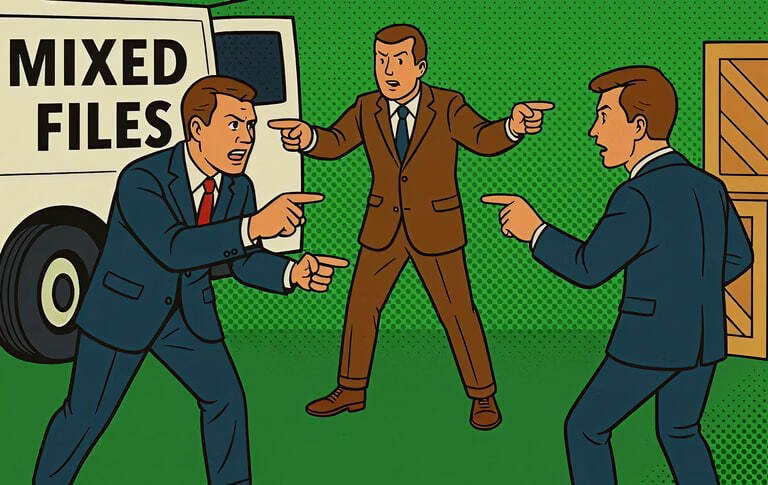
Mixed Credit File: How Someone Else’s Mistakes Can Damage Your Life
Mixed identity errors - also known as "mixed files" - occur when a consumer's credit report contains information belonging to someone else. These errors can result in credit reports showing unpaid debts, bankruptcies, or unfamiliar addresses, even when the consumer has no connection to these records. For thousands of Americans each year, mixed identity errors cause financial hardship, job loss, and personal stress.
According to the Consumer Financial Protection Bureau's December 2025 report on credit and consumer reporting complaints, the CFPB received more than 5.6 million complaints between January 2024 and June 2025, and almost 4.8 million of those were about credit and consumer reporting. About 3.9 million of those credit reporting complaints were about the three largest credit reporting agencies, Equifax, Experian, and TransUnion, a volume that has surged nearly 3,000% since January 2020. The report does not break mixed file errors out as a standalone category, but mistaken identity and mixed files are among the most common reporting errors our law firm encounters.
Some consumers may face a greater risk of mistaken identity when reporting companies rely on insufficient identifying information. The CFPB has specifically warned that name-only matching can create a heightened risk of mismatches and that this risk may disproportionately affect Hispanic, Black, and Asian consumers because of differences in surname diversity.
A mixed file error can turn your life upside down without warning. It doesn't matter how careful you’ve been with your own finances - someone else's mistakes, debts, or legal issues can suddenly become attached to your name. When that happens, you may find yourself unfairly denied loans, housing, employment opportunities, or facing higher costs for basic services like insurance. The damage to your financial standing and peace of mind can be swift, serious, and deeply unfair.
At Consumer Attorneys, we specialize in helping individuals reclaim their credit profiles and their financial lives after a mixed identity error threatens their future.
What Is a Mixed Identity Error?
A mixed identity error occurs when the credit information of two or more people becomes incorrectly combined into a single credit file. This mistake usually happens because individuals share similar personal information, such as:
- Similar or identical names
- Close or overlapping addresses
- Transposed Social Security numbers
- Shared birthdates
Credit reporting agencies like Experian, Equifax, and TransUnion use complex matching algorithms to compile credit reports, but these systems are not foolproof. When personal data overlaps or is incorrectly recorded, your file may become contaminated with someone else's financial history.
Signs You May Be Dealing With a Mixed File
Mixed files don't always announce themselves. Some warning signs to watch for:
- An account, collection, or bankruptcy you don't recognize and never opened.
- A different middle name, suffix (Jr., Sr., II, III), or date of birth listed somewhere on your report.
- An address you've never lived at, especially in a different city or state.
- A sudden, unexplained credit score drop with no matching activity in your own accounts.
- A relative, especially a parent, sibling, or someone with a similar name, who has significant negative credit history.
If more than one of these applies to you, it's worth requesting your full credit file from all three bureaus and reviewing every account line by line rather than just checking your score.
Real-World Example of Mixed Identity Error
Career Opportunity Lost
Michael, a software engineer from New Jersey, discovered a bankruptcy on his credit report when applying for a senior management position. The bankruptcy actually belonged to another "Michael Johnson" who lived two towns over. Despite submitting dispute letters and evidence, Michael’s credit report remained tainted for months, costing him a six-figure job offer that required a clean financial background check.
Why Mixed Files Are So Dangerous
Mixed files can have consequences far beyond the credit report itself. When another person’s debts, accounts, or public records are attributed to you, the inaccurate information can affect decisions involving credit, housing, employment, and other services that rely on consumer reports.
In 2023, the Consumer Financial Protection Bureau reported that mixed file complaints made up roughly 15% of all credit reporting complaints. Research also shows that a credit score drop of just 100 points — easily caused by someone else’s debt showing up in your file — can increase mortgage rates by over 1.5%, translating into tens of thousands of dollars in additional costs over a loan’s lifetime. Beyond financial damage, certain groups like people with common surnames and minority consumers are disproportionately affected, compounding existing barriers to housing, employment, and fair lending. These aren’t just clerical slip-ups — they’re high-stakes errors that can derail people’s lives.
- Financial Harm: Mixed files can destroy your credit score, making loans, mortgages, and even insurance unaffordable or inaccessible.
- Employment Barriers: Many employers conduct credit checks, especially for jobs involving financial responsibility or security clearances.
- Housing Insecurity: Landlords often screen tenant credit reports, and errors can cause rental applications to be denied.
- Emotional Distress: Dealing with wrongful debt and identity confusion can cause significant anxiety, frustration, and damage to your reputation.
Mixed Credit Files vs. Identity Theft: What's the Difference?
Many people assume that unfamiliar accounts automatically mean they've become victims of identity theft. While identity theft can certainly result in inaccurate credit reporting, it's important to understand that mixed credit files and identity theft are two very different problems.
With identity theft, someone has fraudulently opened accounts or used your personal information without your permission.
With a mixed credit file, the accounts usually belong to a real person, just not you. Instead of being the victim of fraud, you've become the victim of a credit bureau matching error.
Understanding the difference matters because the process for correcting each issue can be very different.
| Mixed Credit File | Identity Theft |
| Someone else's legitimate accounts appear on your report. | Fraudulent accounts are opened in your name. |
| Usually caused by inaccurate matching systems. | Caused by criminal misuse of your identity. |
| Often involves consumers with similar names or identifying information. | Often involves stolen personal information or data breaches. |
| May require correcting the credit bureau's mixed file. | May require fraud alerts, identity theft reports, and account closures. |
At our law firm, we've spoken with many consumers who initially believed they were victims of identity theft, only to discover that their credit reports had actually been mixed with another person's file. Identifying the true cause of the problem is often the first step toward getting it corrected.
Why Disputing Alone Often Fails
While the Fair Credit Reporting Act gives consumers the right to dispute inaccurate information, the process is often stacked against them. Studies show that credit bureaus resolve over 75% of disputes using automated systems, frequently without a meaningful human review. These systems rely heavily on data furnishers — like banks or lenders — to “verify” the disputed information, which often leads to the same incorrect data being confirmed and left on the report. According to a CFPB report, consumers frequently face closed disputes marked “verified as accurate,” even when presenting clear evidence of a mixed file. As a result, many people get stuck in frustrating cycles of dispute, denial, and re-dispute, all while the harmful information remains on their record. Without legal pressure or the threat of litigation, credit bureaus have little incentive to perform the deep investigation mixed file errors require.
Mixed file disputes are notoriously complex. Consumers often face:
- Automated "investigations" that fail to resolve the root problem.
- Credit bureaus "verifying" wrong information without separating the mixed data.
- Frustrating cycles of disputes being closed without corrections.
Without legal intervention, many consumers find themselves trapped in a loop where errors persist despite repeated efforts.
Your Rights Under the Fair Credit Reporting Act (FCRA)
The FCRA guarantees your right to an accurate credit report and imposes duties on credit bureaus and furnishers to investigate and correct mixed file errors. If they fail to act properly, you may be entitled to:
- Actual damages for financial and emotional harm
- Statutory damages
- Punitive damages
- Attorney's fees and costs
Moreover, legal pressure often compels faster and more thorough corrections than consumer disputes alone.
Consumer Attorneys Case:
Hayes v. TransUnion Rental Screening Solutions, Inc.
In Hayes v. TransUnion Rental Screening Solutions, Inc. (N.D. Ill. 2025), our client and his wife applied to rent a home in Katy, Texas. TransUnion's tenant screening report showed a Domestic Battery conviction under his name. The conviction wasn't his. It belonged to a different person with a similar name and the same date of birth, but a different first name, middle name, suffix, and Social Security number, differences that would have been obvious with a basic records check. Our client disputed the error immediately. TransUnion failed to process the first dispute at all. By the time a second dispute finally got the record removed, the landlord had already rented the home to another applicant. This is a textbook mixed file: two real people, sharing just enough identifying information for an automated system to merge their records, with no human review catching the difference before the damage was done.
Prior results do not guarantee a similar outcome in your case. Every mixed file situation is different.
How Consumer Attorneys Can Help
Correcting a mixed file error requires precision, persistence, and legal expertise. At Consumer Attorneys, we:
- Conduct Detailed File Reviews: We obtain your full credit files from all three major bureaus to identify the scope of the problem.
- Prepare Comprehensive Disputes: We present detailed evidence challenging the mixed information.
- Pursue Litigation if Necessary: When credit bureaus fail to act, we aggressively pursue lawsuits to enforce your rights and seek compensation.
- We operate under fee-shifting provisions, meaning we aim to recover our legal fees from the credit bureaus and furnishers - not from your pocket.
Mixed identity errors can feel overwhelming, but you don’t have to fight alone. Contact Consumer Attorneys today for a free consultation. Let us help you separate your identity, restore your credit, and reclaim your financial future.

Mixed Credit Reports
Daniel Cohen

Mixed Credit Reports
David Pinkhasov

Mixed Credit Reports
Moshe Boroosan

Mixed Credit Reports
Meir Rubinov

Mixed Credit Reports
Jonathan Krikheli

Mixed Credit Reports
Nisan Zaghi

Mixed Credit Reports
Yaear Weintroub

Mixed Credit Reports
Atid Malka

Mixed Credit Reports
Max Warshaw



I work in finance and expected MUCH more care in every aspect of data handling compared to what actually happens at credit bureaus after discovering incorrect data on my credit report. Finding information belon...
As someone in finance, I expected credit bureaus to handle data with WAY more care. When I found someone else’s information on my report, I was shocked.
I did my research and chose Consumer Attorneys because the...
When my mortgage got denied, I was confused. When I saw WHY? I was furious. Someone else’s credit info was on my report, and I had no idea how long it had been there.
Tried fixing it myself, wasted time. Consume...
Saw the name "John Depp" on my credit report. Thought, cool, maybe I’ve been discovered!
Spoiler: I wasn’t. Instead of a Hollywood career, I got a credit disaster.
Consumer Attorneys saved me. They erased the mes...
Honestly? I didn’t think they could help. My credit report was a mess, and I figured once the damage was done, that was it.
Then I started working with this team. They took my case seriously, worked through ever...
Frequently Asked Questions
A mixed credit file occurs when information from another person’s credit history is mistakenly combined with yours on your credit report. This can result in unfamiliar debts, bankruptcies, or addresses showing up under your name, often causing serious financial and personal harm.
If you win a lawsuit against a credit reporting agency, you may be entitled to actual damages for financial and emotional harm, statutory damages, punitive damages if their conduct was willful, and reimbursement of your attorney’s fees and legal costs.
If your credit reports are mixed, another person may see some of your information, like your name, last four digits of your Social Security number, and addresses. However, this limited information is usually not enough to commit fraud or steal your identity. In many cases, the other person is an honest, law-abiding consumer - sometimes even a family member - with no intention to misuse your information.
You should contact a lawyer if the mixed information caused a denial, higher costs, collection activity, emotional distress, or if the credit bureau failed to correct the problem after you disputed it. A lawyer can review whether the bureau followed the FCRA and whether you may have a claim for damages.
Yes. A mixed credit file and a mixed background report may involve separate FCRA violations. Depending on the harm, you may be able to seek compensation for lost income, credit denials, housing denials, emotional distress, and other damages.
Bring copies of your credit reports, background reports, denial or adverse action letters, dispute letters, responses from credit bureaus or screening companies, and screenshots of the incorrect information. These documents help show where the reporting system failed.
R
ONGS™